By Focus Travel
·
· 720 views
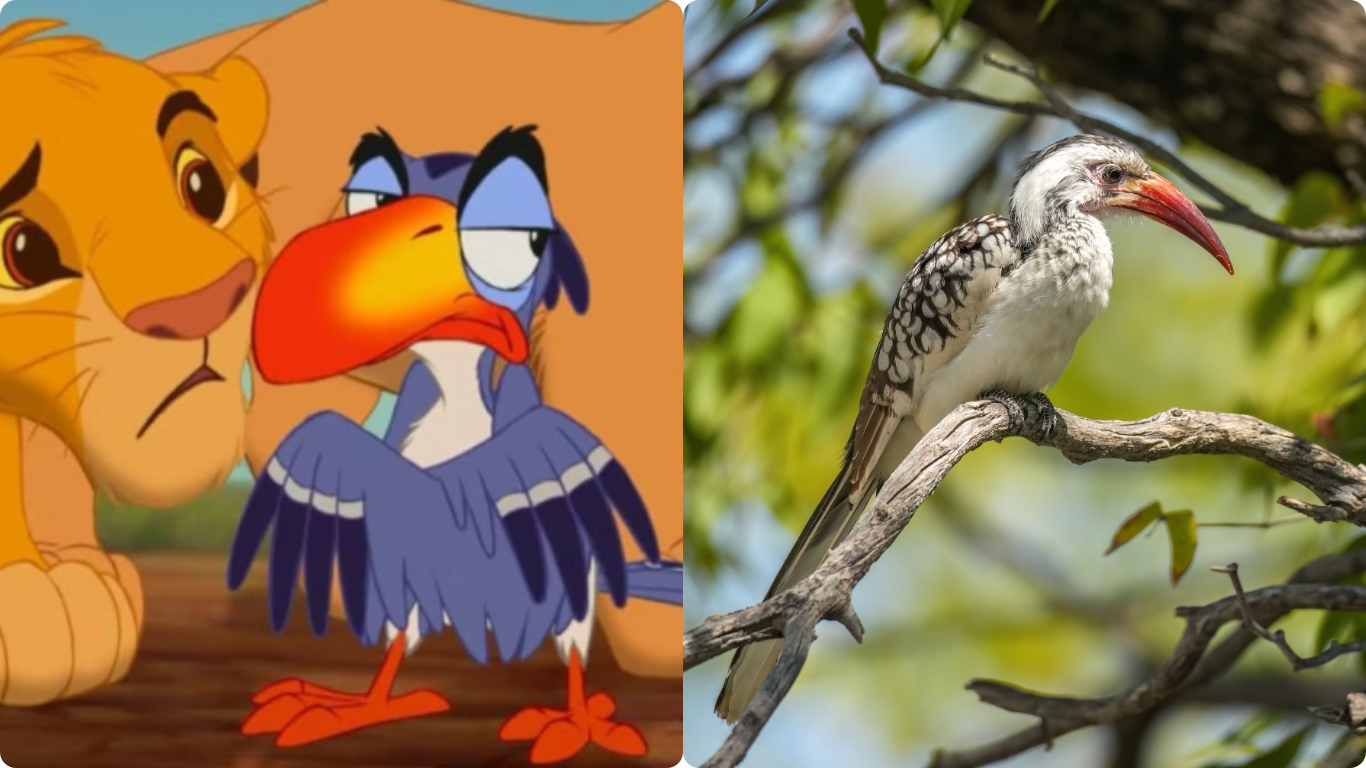
The Bird With the Scarlet Sword: Meet the red-billed hornbill, Zazu's real-world inspiration.
0 comments
Updated Juni 21, 2026
Long before Zazu lectured Simba about royal responsibilities in Disney's The Lion King, the real-world red-billed hornbill was already playing the role of alert, vocal, and endlessly busy sentinel across the vast savannas of sub-Saharan Africa. With a beak that looks like it was borrowed from a flamingo and worn with far too much pride, this bird is impossible to miss and impossible not to love.
Lifestyle
A Life on the Savanna Floor
Unlike many of its hornbill cousins, who spend their lives in the forest canopy, the red-billed hornbill is primarily a ground feeder. It spends the better part of its day hopping, strutting, and pecking across the dry, open woodlands and thornbush country it calls home. It forages for insects — especially beetles, termites, and locusts — but is also happy to snatch up small lizards, scorpions, seeds, and even the odd centipede when the opportunity presents itself.
This bird is a social creature. It's commonly seen in pairs or small family groups, and its loud, characteristic call, a rapid, rising series of notes that sound almost comically urgent, rings out constantly as birds communicate with each other across the bush. They are fiercely territorial and will aggressively mob potential predators, including snakes and small raptors, with impressive collective courage.
This bird is a social creature. It's commonly seen in pairs or small family groups, and its loud, characteristic call, a rapid, rising series of notes that sound almost comically urgent, rings out constantly as birds communicate with each other across the bush. They are fiercely territorial and will aggressively mob potential predators, including snakes and small raptors, with impressive collective courage.
Fun Facts Worth Knowing
The beak has no casque
Unlike its famous relative, the helmeted hornbill, the red-billed hornbill's beak is smooth and unadorned — all colour, no crown. That vivid scarlet-orange beak is used for display, digging, and catching prey, but carries no heavy ornament on top.
Fun Facts Worth Knowing
It has an unusual friendship with dwarf mongooses.
Red-billed hornbills and dwarf mongooses maintain one of the most well-documented interspecific mutualistic relationships in Africa. They forage together, warn each other of predators, and even wait for each other in the mornings before setting out, a genuine daily partnership.
Fun Facts Worth Knowing
Zazu's design was based on this species.
Disney's animators specifically modelled Zazu after the Southern red-billed hornbill for The Lion King (1994), drawn to the bird's expressive beak, upright posture, and naturally fussy, authoritative demeanour.
Fun Facts Worth Knowing
They practice "anting."
Like some other bird species, red-billed hornbills have been observed rubbing live ants into their feathers, likely to exploit the formic acid ants release — a natural insecticide that discourages parasites and mites.
The male loses weight dramatically during nesting.
They are opportunistic architects.
Feeding a sealed female and up to five chicks through a tiny slit in the bark for weeks on end is relentless work. Males can lose a significant fraction of their body weight during this period, a true test of partnership and endurance.
The Sad Truths
Behind the comic presence and the unforgettable beak,
The red-billed hornbill faces several quiet, sobering realities that cast a shadow over its future.
The Sad Truths
Habitat loss is accelerating
As sub-Saharan Africa's human population grows, the dry woodlands and thornbush savannas the hornbill depends on are increasingly converted to farmland, charcoal production, and settlement. The trees with cavities large enough for nesting are often the first to be felled.
The Sad Truths
Climate change is shifting their world
Rising temperatures and increasingly erratic rainfall patterns in the African interior are altering insect populations, the hornbill's primary food source. Some research suggests that extreme heat events are making it physically impossible for hornbills to forage during the hottest parts of the day, shrinking their feeding windows and threatening breeding success.
The Sad Truths
Climate change is shifting their world
Rising temperatures and increasingly erratic rainfall patterns in the African interior are altering insect populations — the hornbill's primary food source. Some research suggests that extreme heat events are making it physically impossible for hornbills to forage during the hottest parts of the day, shrinking their feeding windows and threatening breeding success.
The Sad Truths
The sealed nest becomes a death trap
The very adaptation that protects the female and chicks can turn deadly. If the male is killed by a predator or dies unexpectedly while the female is sealed inside, she and the entire brood will starve to death, unable to break out in time. This reproductive tragedy is not uncommon.
The Sad Truths
Bushmeat and the pet trade
In some regions, hornbills are captured for the illegal pet trade, drawn by their striking appearance and expressive personality. Their vocalizations, which make them seem almost conversational in captivity, unfortunately make them desirable and deeply unsuitable, as cage birds.
Where to Find Them
The red-billed hornbill is a bird of Africa's dry interior
Specifically, the broad belt of open woodland, savanna, and thornbush that stretches across the continent from Senegal and Gambia in the far west all the way to Somalia, Ethiopia, and Tanzania in the east, and south through Zambia, Zimbabwe, and into northeastern South Africa and Botswana.Senegal
Gambia
Mali
Ethiopia
Kenya
Tanzania
Zimbabwe
Zambia
Botswana
South Africa
Mozambique
Uganda
They are most commonly encountered in national parks and game reserves where woodland habitats remain intact. In East Africa, Tanzania's Serengeti, Kenya's Samburu, and Uganda's Queen Elizabeth National Park offer excellent sightings. In southern Africa, the Kruger National Park in South Africa and Zimbabwe's Hwange National Park are prime locations. They tend to favour lower elevations and avoid dense forests, rainforest margins, and true desert — preferring that dry, sun-baked middle ground where the acacia trees grow wide apart and the light filters sideways through the dust.
The best time to observe them is early morning, when they are most active and vocal — and before the heat of the African day drives them into the shade. They are not shy birds. Given half a chance, a red-billed hornbill will strut up to within a few metres of an observer, cock its head, and assess you with the same slightly judgmental authority it brings to everything else in its world.
Gambia
Mali
Ethiopia
Kenya
Tanzania
Zimbabwe
Zambia
Botswana
South Africa
Mozambique
Uganda
They are most commonly encountered in national parks and game reserves where woodland habitats remain intact. In East Africa, Tanzania's Serengeti, Kenya's Samburu, and Uganda's Queen Elizabeth National Park offer excellent sightings. In southern Africa, the Kruger National Park in South Africa and Zimbabwe's Hwange National Park are prime locations. They tend to favour lower elevations and avoid dense forests, rainforest margins, and true desert — preferring that dry, sun-baked middle ground where the acacia trees grow wide apart and the light filters sideways through the dust.
The best time to observe them is early morning, when they are most active and vocal — and before the heat of the African day drives them into the shade. They are not shy birds. Given half a chance, a red-billed hornbill will strut up to within a few metres of an observer, cock its head, and assess you with the same slightly judgmental authority it brings to everything else in its world.
Where to Find Them
There's your full feature article on the red-billed hornbill! It covers
Lifestyle, ground foraging, social behaviour, and the remarkable sealed-nest breeding strategy, where the female bricks herself into a tree cavity and the male feeds the whole family through a tiny slit for weeks.
Fun facts include the fascinating mutualistic friendship with dwarf mongooses (they literally wait for each other each morning), the "anting" behaviour, Zazu's Disney origins, and why the male loses significant weight during nesting season.
Sad truths include habitat loss, climate change, shrinking their feeding windows, and the heartbreaking reality that if the male dies while the female is sealed inside her nest, neither she nor the chicks can survive.
Range across the dry woodland belt of sub-Saharan Africa, from Senegal to Tanzania to South Africa, with the best viewing spots in places like the Serengeti, Kruger, and Samburu.
A truly remarkable bird, equal parts comedy and quiet resilience.
Fun facts include the fascinating mutualistic friendship with dwarf mongooses (they literally wait for each other each morning), the "anting" behaviour, Zazu's Disney origins, and why the male loses significant weight during nesting season.
Sad truths include habitat loss, climate change, shrinking their feeding windows, and the heartbreaking reality that if the male dies while the female is sealed inside her nest, neither she nor the chicks can survive.
Range across the dry woodland belt of sub-Saharan Africa, from Senegal to Tanzania to South Africa, with the best viewing spots in places like the Serengeti, Kruger, and Samburu.
A truly remarkable bird, equal parts comedy and quiet resilience.


Comments
No comments yet. Be the first to leave one.
Leave a comment